“Microlofts. Maximum design. Boutique living.”
Microloft – Transforming Urban Ground Floors into Living Spaces
Microloft revitalizes underused ground-floor spaces and transforms them into architecturally sophisticated micro-lofts that deliver maximum living quality on minimal floor space. Instead of anonymous housing, the concept focuses on visibility, exchange, and a vibrant dialogue with the urban environment.
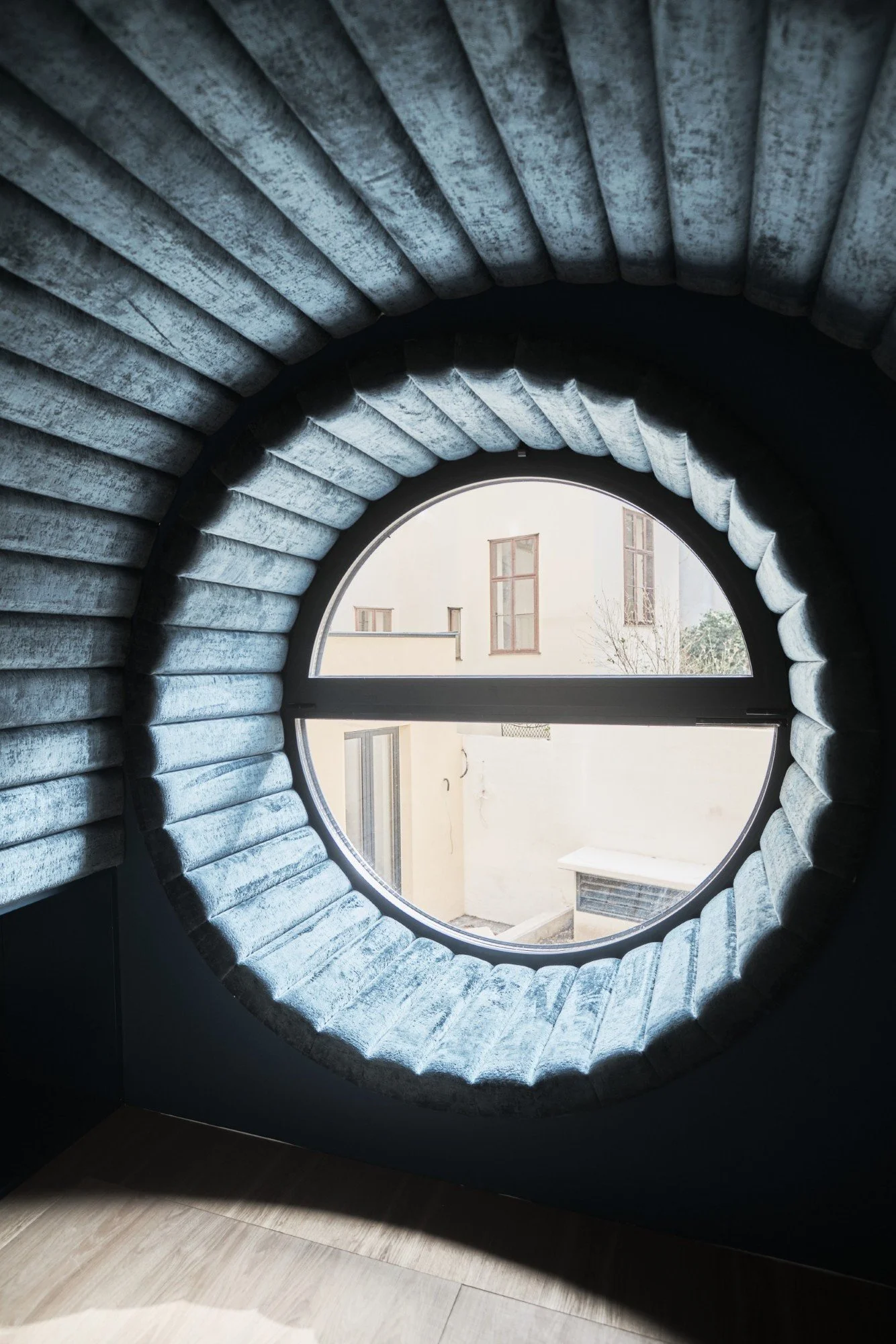
The lofts themselves are defined by efficient and elegant spatial organization: generous ceiling heights create a mezzanine level for sleeping, while the lower level combines living, cooking, and dining into one open space. Every square meter is intelligently designed — from the compact, high-quality bathroom to multifunctional built-ins. The material palette draws on a reduced industrial aesthetic: exposed brick, steel, and clean black-and-white lines create an urban loft character in miniature.
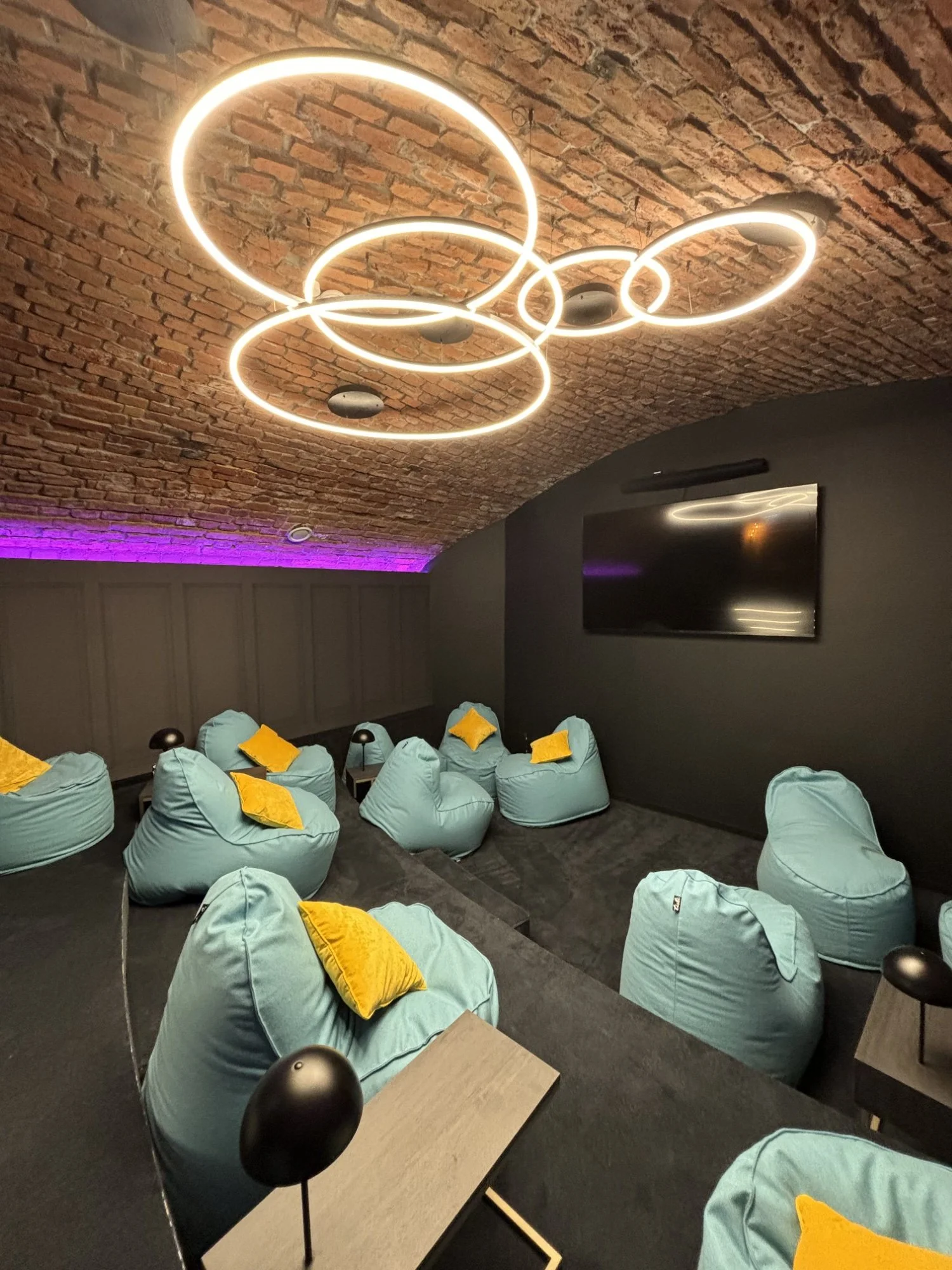
But Microloft thinks beyond the individual unit: the basements are not used as storage, but activated as a designed community zone for interaction, events, and culture. Movie nights, sports screenings, workshops, private parties, and cooking classes take place here — open to residents and external guests alike. A small bistro serves breakfast, coffee, and snacks, encouraging direct social contact. The on-site host acts as a connector for residents and the neighborhood.
This interplay between private retreat (in the loft) and community zone (in the basement and bistro) makes Microloft a place of social exchange — and a statement against the decline of active urban ground-floor areas.
The FESH Design Blueprint
A) Design & Architecture
Microloft units feature a two-level layout with a mezzanine: living, cooking, and working on the lower level — sleeping above. Bathrooms and storage are integrated smartly and space-efficiently. Exposed brick, metal frames, clear colors, and loft-style elements create an industrial, urban character. High-quality design ensures a sense of generosity and style despite compact dimensions.
B) Community & Zone
The basement level serves as a “Zone” — a shared space for community and culture: mini-cinema, events, cooking classes, sports screenings, or private gatherings. A small bistro, run by a host who offers coffee, breakfast, and conversation, becomes a hub for residents and neighbors. The Zone strengthens community spirit and turns Microloft into an open urban place, not just a residential product.
C) Sustainability & Existing Structures
Microloft reuses existing buildings and infrastructure. Rather than building new, it densifies within the existing urban fabric. Ground and basement floors are reactivated, space is used efficiently, and ecological footprint minimized. Air-source heat pumps and durable materials ensure energy efficiency. The result: sustainable densification without new land sealing — urban, resource-conscious, and economically sound.